
SEO GUIDE
Why Your Website Isn't Ranking on Google (Even If It Looks Great)
If you’re wondering why your website isn’t ranking on Google, you’re not alone. Many business owners invest time and money into creating a professional-looking website but still struggle to generate organic traffic. In this guide, you’ll learn the most common reasons websites fail to rank and the practical SEO strategies you can use to improve your visibility.
Author
Jayson Mangadap
July 7, 2026
10 Min Read
Table of Contents
IN THIS GUIDE
INTRODUCTION
Is Your Website Indexed by Google?
Before your website can rank on Google, it must first be indexed. Indexing is the process where Google discovers, crawls, and stores your web pages in its search database. If a page isn’t indexed, it won’t appear in search results, no matter how well it is designed or optimized.
One of the easiest ways to check whether your website is indexed is by searching site:yourdomain.com in Google. If your pages appear in the search results, they have been indexed. For a more detailed view, use Google Search Console to see which pages are indexed, which are excluded, and whether Google has encountered any crawling issues.
If your website is not indexed, common causes include blocked pages in robots.txt, incorrect noindex tags, crawl errors, poor internal linking, or a newly launched website that Google hasn’t discovered yet. Identifying and resolving these issues should always be your first step before focusing on other SEO strategies.
Understanding why your website isn’t ranking on Google is the first step toward identifying the SEO issues that may be limiting your search visibility.
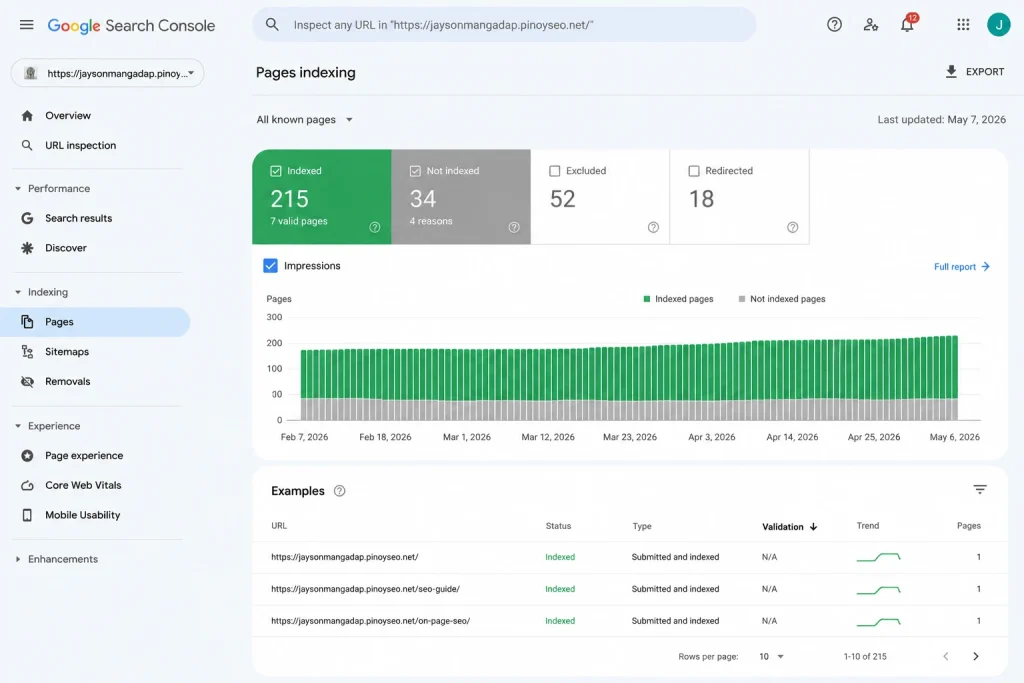
Google Search Console’s Pages Indexing report helps identify indexed, excluded, and non-indexed pages that may affect your website’s visibility in Google Search.
Are You Targeting the Right Keywords?
Choosing the right keywords is one of the most important factors in SEO. Many websites fail to rank because they target highly competitive keywords or create content that doesn’t match what users are actually searching for. Even well-designed websites with quality content can struggle if the wrong keywords are targeted.
Before creating a page or writing a blog post, research the search terms your audience uses. Tools like Google Keyword Planner, Ahrefs, Ubersuggest, and Semrush can help you identify keywords with good search volume and realistic competition. Focus on keywords that match your business, your audience’s intent, and the services you provide.
Instead of targeting broad keywords like “SEO,” consider using more specific long-tail keywords such as “Freelance SEO Specialist in the Philippines” or “Technical SEO Expert Philippines.” These keywords are generally easier to rank for and attract visitors who are more likely to become clients.
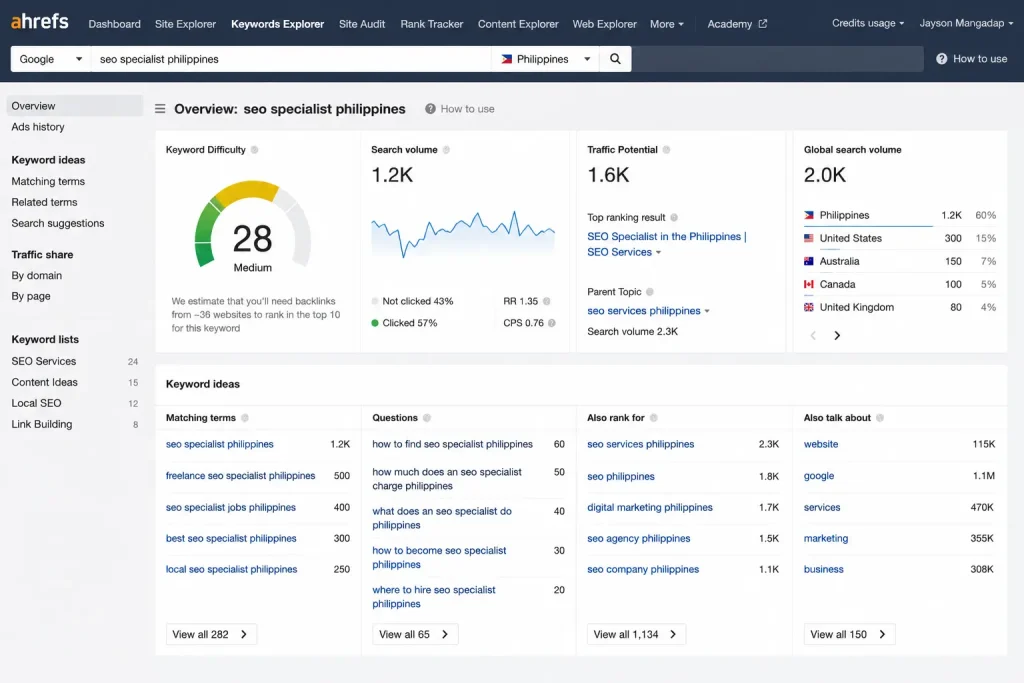
Ahrefs Keywords Explorer provides valuable insights into search volume, keyword difficulty, traffic potential, and related keyword ideas, helping you identify opportunities to improve your SEO strategy.
Technical SEO Problems Behind a Website That Isn't Ranking on Google
Technical SEO is the foundation of every successful website. Even if you publish high-quality content and target the right keywords, technical issues can prevent search engines from properly crawling, indexing, and ranking your pages.
Some of the most common technical SEO problems include broken links, missing meta titles and descriptions, duplicate content, slow page speed, poor mobile responsiveness, incorrect canonical tags, and crawl errors. These issues reduce your website’s visibility and create a poor experience for both users and search engines.
Perform regular technical SEO audits using tools such as Google Search Console, Semrush Site Audit, Ahrefs Site Audit, or Screaming Frog. These tools help identify problems before they affect your rankings and provide recommendations for improving your website’s overall health.
Fixing technical SEO issues creates a strong foundation for every other SEO strategy. Once your website is technically optimized, Google can crawl your pages more efficiently, resulting in better visibility, improved user experience, and stronger long-term search performance.
Technical SEO issues are one of the biggest reasons why your website isn’t ranking on Google, even when your content is valuable and well-written.
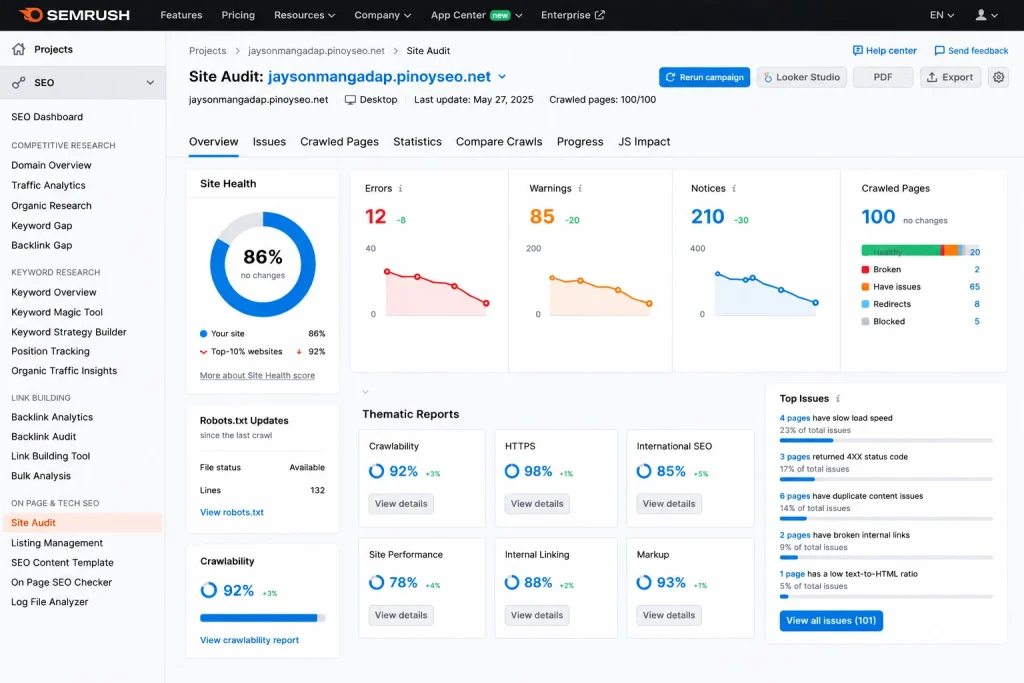
Semrush Site Audit helps identify technical SEO issues such as crawl errors, broken pages, website health, and optimization opportunities to improve search performance and user experience.
Slow Website Speed
Website speed is one of the most important ranking factors in modern SEO. Visitors expect pages to load quickly, and even a delay of a few seconds can increase bounce rates and reduce conversions. Google also considers page speed as part of its ranking signals, especially on mobile devices.
Several factors can slow down a website, including oversized images, unoptimized code, excessive plugins, slow web hosting, render-blocking resources, and poor caching. These issues not only affect user experience but also make it harder for search engines to crawl your website efficiently.
Use tools such as Google PageSpeed Insights, GTmetrix, or Lighthouse to analyze your website’s performance. These tools provide detailed recommendations, including image optimization, browser caching, JavaScript optimization, and Core Web Vitals improvements.
Improving your website’s speed creates a better experience for visitors while increasing the likelihood of achieving higher rankings in Google Search. A faster website keeps users engaged, reduces bounce rates, and supports long-term SEO success.
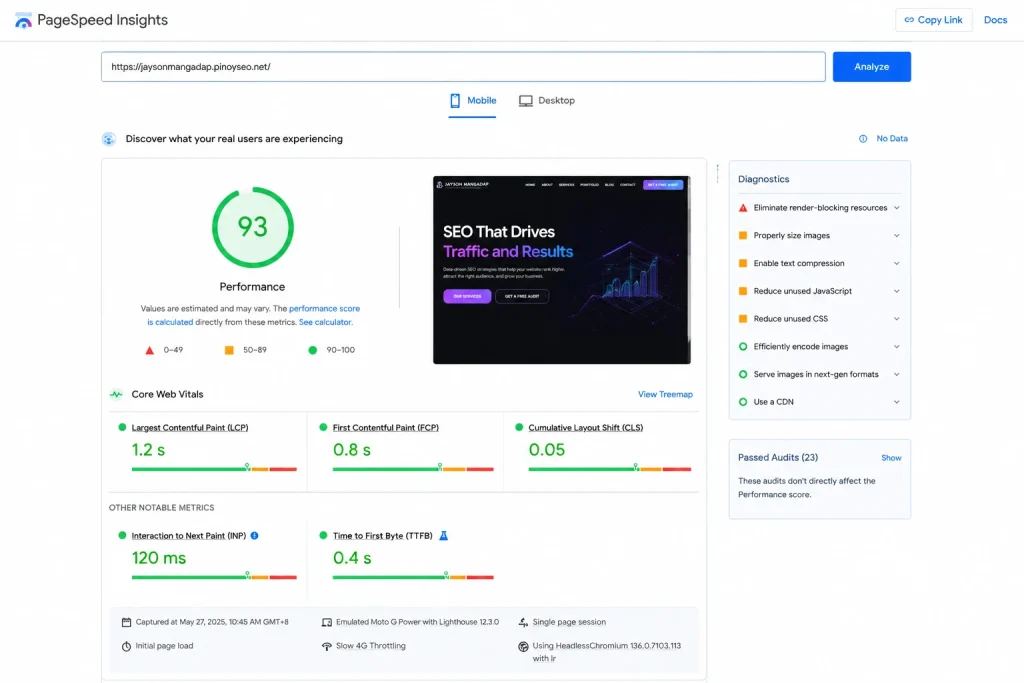
Google PageSpeed Insights measures website speed, Core Web Vitals, and performance metrics to identify opportunities for improving user experience and search engine rankings.
Poor Content Quality: Another Reason Your Website Isn't Ranking on Google
Content is one of the strongest signals Google uses to understand and rank your website. Publishing pages with little value, duplicate information, or outdated content makes it difficult to compete in search results, even if your website is technically optimized.
High-quality content should answer the user’s questions, provide practical solutions, and demonstrate real expertise. Instead of writing only for search engines, focus on creating helpful, accurate, and engaging content that satisfies search intent and keeps visitors on your website longer.
Regularly update older articles with fresh information, improve readability using headings and images, and include internal links to related content. Google rewards websites that consistently publish valuable content and maintain it over time.
Remember that quality is more important than quantity. A single well-researched article that genuinely helps readers will often outperform multiple short articles with little useful information.
Improving your content quality can significantly increase your chances of ranking higher if you’re wondering why your website isn’t ranking on Google.
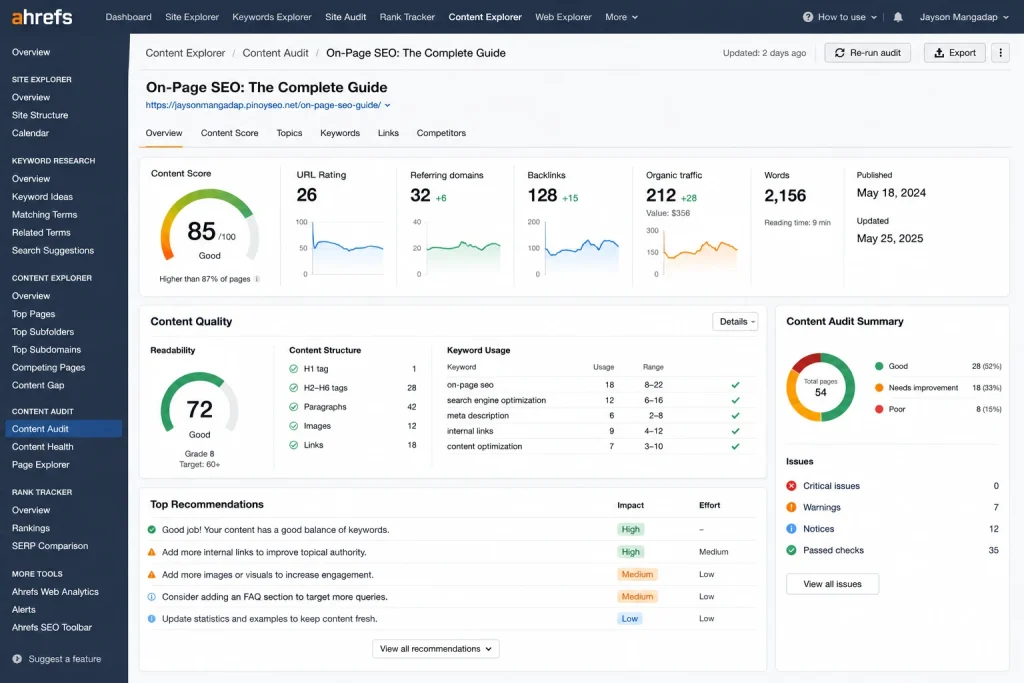
Ahrefs Content Audit helps evaluate content quality, keyword optimization, readability, and SEO opportunities, making it easier to identify pages that need improvement to increase organic search performance.
Weak Internal Linking
Internal links help search engines understand the structure of your website and discover important pages more efficiently. They also guide visitors to related content, increasing engagement and encouraging them to spend more time on your website.
Many websites miss valuable ranking opportunities because their pages are isolated or have very few internal links. Without a strong internal linking structure, search engines may struggle to understand which pages are most important, making it harder for those pages to rank.
Whenever you publish a new page or blog post, link it to relevant articles, service pages, and supporting resources on your website. Use descriptive anchor text instead of generic phrases like “click here” so both users and search engines understand the context of the linked page.
A well-planned internal linking strategy improves website navigation, distributes page authority across your site, and helps Google crawl your content more efficiently. It is one of the simplest yet most effective ways to strengthen your overall SEO performance.
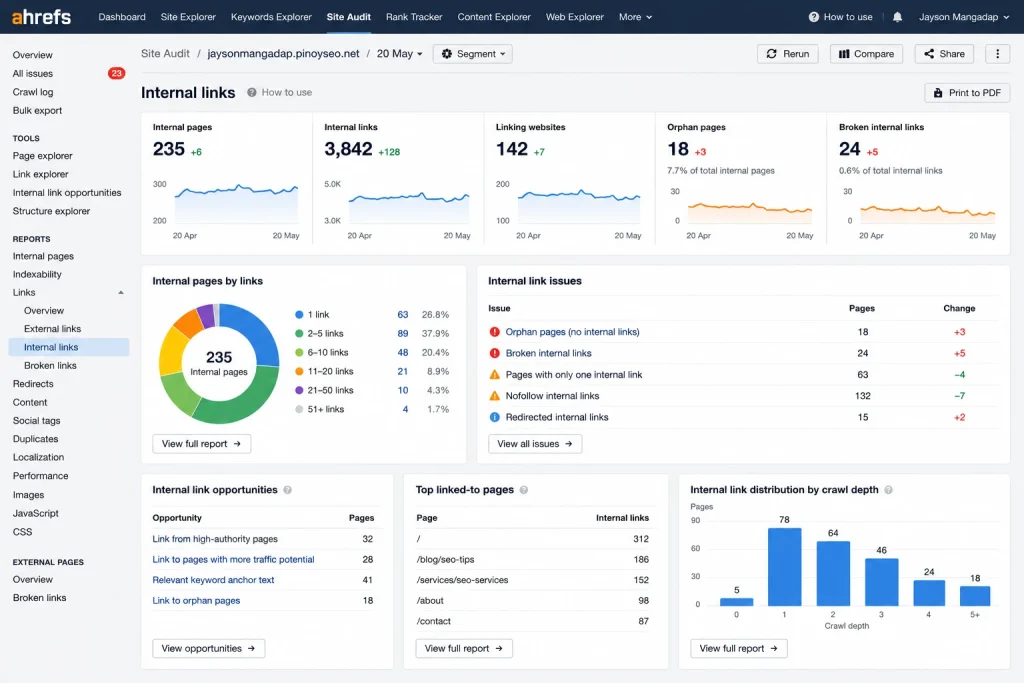
Ahrefs Internal Links report helps identify orphan pages, internal linking opportunities, and crawlability issues, making it easier to improve website navigation and distribute page authority effectively.
Missing Backlinks
Backlinks are links from other websites that point to your pages. They act as signals of trust and authority, helping search engines determine whether your content is valuable and worthy of higher rankings. Even with excellent content and a technically optimized website, ranking can be difficult if your site has few or no quality backlinks.
Not all backlinks provide the same value. Links from reputable and relevant websites carry much more weight than links from low-quality or unrelated sources. Building backlinks naturally through high-quality content, guest posting, digital PR, business directory listings, and genuine industry relationships is a safer and more sustainable strategy than purchasing links.
Regularly monitor your backlink profile using tools such as Ahrefs, Semrush, or Google Search Console. These platforms help you discover new backlinks, identify lost links, and analyze the authority of websites linking to your content.
A strong backlink profile increases your website’s credibility, improves domain authority, and strengthens your ability to compete for more competitive keywords in Google Search.
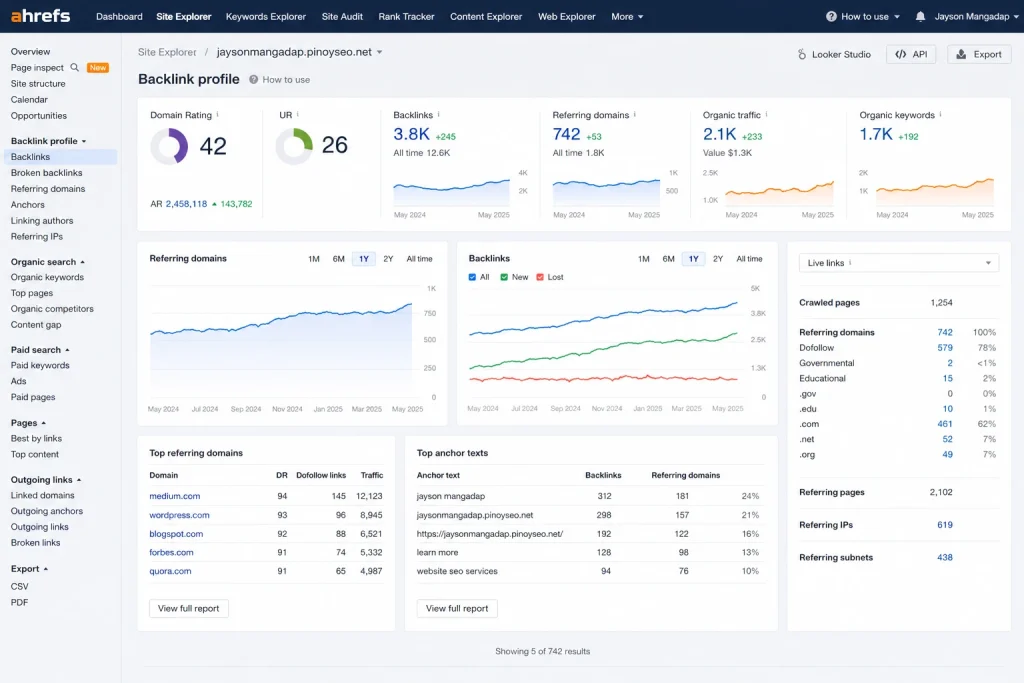
Ahrefs Backlink Profile provides insights into referring domains, backlink growth, anchor text distribution, and domain authority, helping identify opportunities to strengthen your website’s authority and improve Google rankings.
How to Fix a Website That Isn't Ranking on Google
Now that you understand the most common reasons websites fail to rank on Google, the next step is to take action. SEO is not about fixing everything at once. Instead, focus on resolving the issues that have the greatest impact on your website’s performance.
Start by making sure your website is indexed by Google and that important pages are accessible to search engines. Next, target keywords that match your audience’s search intent and optimize your content to provide clear, valuable answers. Regularly perform technical SEO audits to identify crawl errors, broken links, and other issues that may affect your rankings.
Improve your website’s loading speed by optimizing images, reducing unnecessary scripts, and choosing reliable web hosting. Continue publishing high-quality content that demonstrates expertise while strengthening your internal linking strategy to help users and search engines discover more of your pages.
Finally, build high-quality backlinks by creating valuable content that other websites naturally want to reference. SEO is an ongoing process, and consistent improvements over time will produce stronger rankings, increased organic traffic, and long-term business growth.
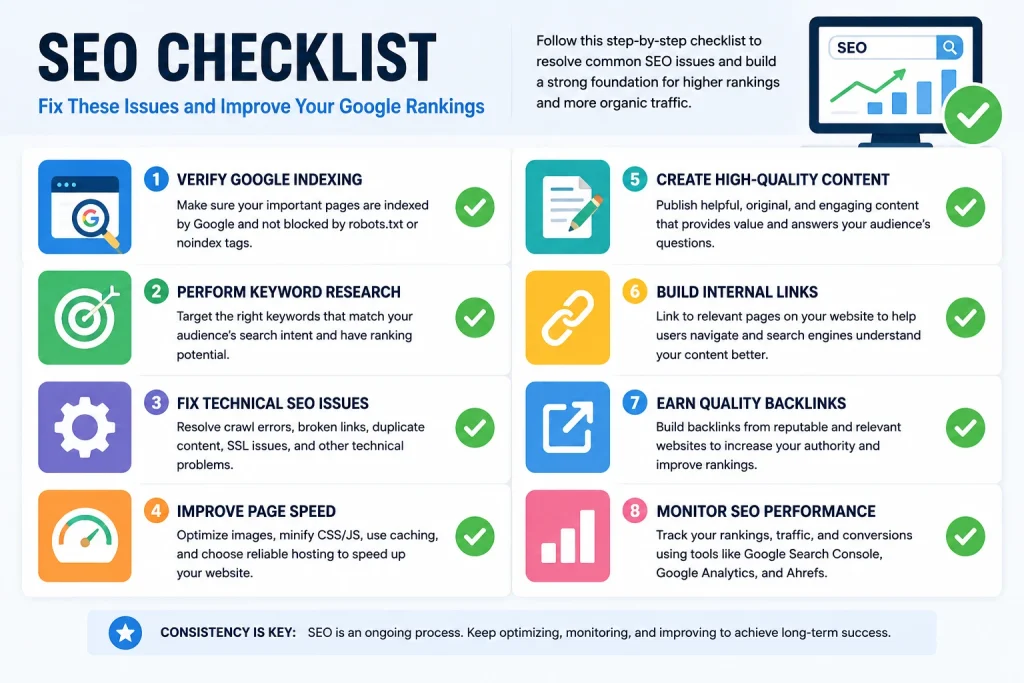
This SEO checklist summarizes the essential optimization tasks every website should complete to improve search visibility, user experience, and long-term organic growth.
Final Thoughts
Why Your Website Isn't Ranking on Google: A Quick Recap
If you’ve been asking yourself why your website isn’t ranking on Google, the issues discussed in this guide provide a practical roadmap for improving your SEO performance. It requires a combination of technical optimization, strategic keyword research, high-quality content, strong internal linking, quality backlinks, and continuous performance monitoring. Every improvement you make contributes to a stronger foundation for long-term organic growth.
SEO is an ongoing process, not a one-time task. Search engines continue to evolve, user behavior changes, and competitors are constantly improving their websites. Regular website audits, content updates, and performance analysis are essential for maintaining and improving your rankings over time.
If your website is struggling to generate organic traffic, start by identifying the issues discussed in this guide and address them one step at a time. Small, consistent improvements often produce better long-term results than trying to fix everything at once.
Whether you’re a business owner, freelancer, or startup, investing in SEO is one of the most effective ways to increase your online visibility, attract qualified visitors, and grow your business sustainably.
NEED HELP WITH YOUR WEBSITE?
Let's Improve Your Google Rankings Together
If you need help finding out why your website isn’t ranking on Google, I can help identify the underlying SEO issues and create a strategy to improve your rankings, traffic, and online visibility.